




25 Nov TKT, CELTA or DELTA? How to Choose the Right Cambridge Teaching Qualification
You want a Cambridge teaching qualification, you open three websites, and you meet three acronyms: TKT, CELTA, DELTA. Each sounds important. Each has a different price, a different workload and a different promise. Choosing wrongly costs money, or months of effort on a course that doesn’t match where you are.
The good news: the three are not competitors. They are steps on the same path. This guide shows you what each one is, who it’s for, and how to tell which step you’re on right now.
Contents
- TKT, CELTA and DELTA at a glance
- What is TKT?
- What is CELTA?
- What is DELTA?
- Where do IHCYLT and young learner courses fit?
- Which qualification is right for you? Five quick scenarios
- Can you do the whole pathway in one centre?
TKT, CELTA and DELTA at a glance
The biggest difference between TKT, CELTA and DELTA is not difficulty. It’s what each one proves. TKT proves you know about teaching. CELTA proves you can teach. DELTA proves you can teach at an expert level and explain why.
| TKT | CELTA | DELTA | |
|---|---|---|---|
| What it is | Modular knowledge test | Initial teaching qualification | Advanced diploma, three modules |
| Level | Knowledge-based, no RQF level | RQF Level 5 | RQF Level 7 |
| Teaching experience needed | None | None | Yes, usually after CELTA |
| Your English level | From about B1–B2 | Around C1 or above | Advanced, near-expert |
| Assessed teaching practice | No | Yes, with real learners | Yes (Module 2) |
| Best for | Building methodology knowledge, a first credential | Starting or formalising a teaching career | Senior teacher, trainer and academic management roles |
What is TKT?
The Teaching Knowledge Test (TKT) is a set of Cambridge exams about the core ideas of English language teaching: how language works, how lessons are planned, how learners learn. There are core modules plus specialist ones, such as teaching young learners or CLIL.
TKT has no teaching practice and no pass or fail. You receive a band for each module, which makes it a low-pressure first step. It suits teachers who want to understand methodology before committing to a full course. It also suits schools that want a shared vocabulary across their staff. Read more on our TKT page.
What is CELTA?
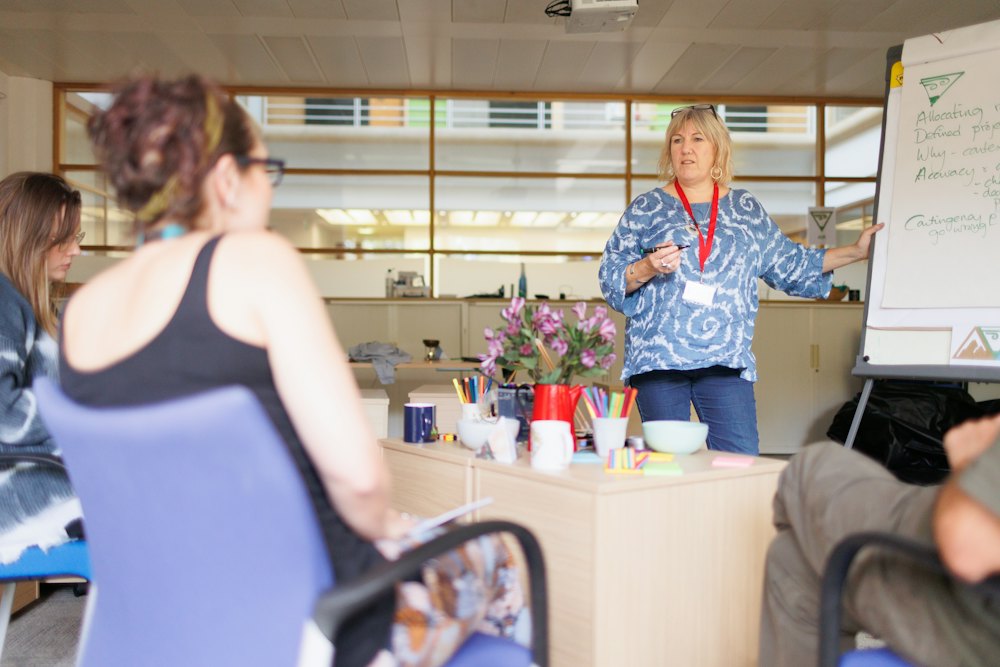
CELTA (Certificate in Teaching English to Speakers of Other Languages) is the world’s most widely recognised initial qualification for teaching English. It’s practical from day one. You plan lessons, teach real adult learners, and get detailed feedback from your tutors after every lesson.
CELTA is for you if you’re new to teaching, or if you’ve been teaching without formal training and want a recognised qualification. You don’t need prior experience, but you do need strong English and the ability to cope with an intensive workload. Many teachers say it changed how they plan every lesson:
“CELTA gave me a clear structure for teaching English. Lesson planning finally made sense.” – Radu M., CELTA graduate at IH Bucharest
There’s also a piece of history worth knowing. CELTA grew out of the IH Certificate, a teacher training course International House first ran in 1962. When you take CELTA at International House, you train in the network where the standard began. See what CELTA involves in detail.
What is DELTA?
DELTA (Diploma in Teaching English to Speakers of Other Languages) is the advanced Cambridge qualification for experienced teachers. It sits at RQF Level 7, the same level as a master’s degree in the UK framework. It has three modules, which you can take separately and in any order:
- Module 1 – understanding language, methodology and resources (written exam);
- Module 2 – developing professional practice (assessed teaching and assignments);
- Module 3 – an extended assignment in a specialist area you choose.
DELTA is for teachers who already have solid classroom experience, usually after CELTA, and want to move towards senior teacher, teacher trainer or director of studies roles. IH Bucharest is the only centre in Romania delivering all three DELTA modules.
Where do IHCYLT and young learner courses fit?
CELTA focuses on teaching adults. If you teach children or teenagers, you’ll need age-specific methodology: classroom management, attention spans, games and stages of development. That’s what the IHCYLT (International House Certificate in Teaching Young Learners and Teenagers) adds. It’s moderated by Cambridge and is usually taken after CELTA. For kindergarten-age learners, there’s the IHVYL specialisation.
Which qualification is right for you? Five quick scenarios
- “I have excellent English but have never taught.” Start with CELTA. If you’re not sure teaching is for you, TKT is a lighter first step.
- “I’ve taught for a few years without formal training.” CELTA will give you structure, confidence and an internationally recognised certificate.
- “I teach children at a school or kindergarten.” CELTA plus IHCYLT, or TKT Young Learners as an entry point.
- “I have CELTA and several years of experience.” DELTA is your next step. Many teachers start with Module 1 or Module 3 and leave the teaching-practice module for later.
- “I want to become a trainer or a director of studies.” DELTA, full stop.
Can you do the whole pathway in one centre?
In Romania, yes. The Teacher Training Centre at IH Bucharest is the only centre in the country delivering the full Cambridge teacher training pathway: TKT, CELTA, all DELTA modules, plus the IHCYLT and IHVYL young learner specialisations. That means one team that knows your history, tutors who’ve seen your teaching, and a clear next step after each qualification.
Conclusion
TKT, CELTA and DELTA answer three different questions: what do you know, can you teach, and how far do you want to go? Pick the one that matches where you are today. The others will be there when you’re ready for them.
Not sure which step is yours? Check the course fees and dates or read how to apply. Our team will help you choose before you commit.

No Comments